February 11, 2026
February 11, 2026
How to Structure a Dinner-to-Club Transition Timeline (Operational Framework)
The best dinner-to-club venues don’t “turn up the music” they run a timed operational sequence that smoothly shifts guest mindset from dining to nightlife. This framework breaks down the transition into clear phases, staff cues, and system changes (music, lighting, service, security) that protect the dining experience while unlocking late-night revenue.
The best dinner-to-club venues don’t “turn up the music” they run a timed operational sequence that smoothly shifts guest mindset from dining to nightlife. This framework breaks down the transition into clear phases, staff cues, and system changes (music, lighting, service, security) that protect the dining experience while unlocking late-night revenue.
High-end restaurants that become mini clubs at night win for one reason: they control the transition. In Dubai and Ibiza, many of the strongest concepts use a predictable pattern, dinner service peaks early, then a designed “energy lift” begins, leading into a late-night lounge/club mode where DJs take over and tables become social hubs (often around 10–11 PM).
The Core Principle: One Venue, Two Operating Modes
A successful hybrid night runs like a planned scene change: sound + lighting + service pacing shift together (not randomly), because guests react to the combined signal. Audio systems tied to lighting “scenes” are a common best practice for day-to-night transitions.
The ELVN Dinner-to-Club Timeline (Example: 6:00 PM–3:00 AM)
Phase 1: Premium Dining (6:00–9:00 PM)
Goal: Protect luxury dining credibility.
Operations focus:
Host + reservations prioritize seating flow and pacing (avoid early bottlenecks).
Music is conversational (lower SPL), warm ambience.
Lighting is brighter/warmer “dining clarity,” not nightlife drama.
No visible “club behavior” yet (no bottle parades, no performer rush).
Manager cue: “Dining is the product.” If this phase feels like a pre-party, you lose high-end diners.
Phase 2: Subtle Energy Lift (9:00–10:30 PM)
Goal: Increase anticipation without breaking the dining mood.
Operations focus:
Menu strategy: push desserts + digestifs + premium cocktails.
Begin micro-entertainment (light percussion moments, subtle performer appearances near bar).
Start the first BPM increase (still refined).
Lighting moves into a softer, more cinematic tone (don’t blackout the room yet).
This is where many venues win or fail: the lift must feel intentional, not like the restaurant “got loud.”
Phase 3: Service Reset + Space Reconfiguration (10:30–11:15 PM)
Goal: Transition the room without chaos.
Operations focus:
Kitchen close timing: communicate last-call for mains clearly to staff (not guests).
Start clearing specific zones for movement (center lanes, bar-front, DJ sightline).
Increase security presence subtly (door + roaming), prepare ID checks if needed.
Switch to “night mode” lighting scenes + audio profile.
Many venues schedule DJs to start as dinner winds down (around 10 PM) to make the transition seamless rather than abrupt.
Manager cue: This is a handover window. FOH captain + nightlife floor manager must run it together.
Phase 4: Transformation Moment (11:15 PM–12:00 AM)
Goal: Make the shift unmistakable — and exciting.
Operations focus:
DJ becomes a visible focal point (not background).
Tables shift from “dining posture” to “social posture” (standing, sharing, movement).
Introduce a signature ritual: bottle presentation, performer-led moment, or “first drop.”
Lighting goes lower with sharper contrast (but keep premium visibility for staff safety/service).
In Ibiza, this concept is explicit: tables are cleared and the venue transforms into club mode after dinner.
Phase 5: Mini Club Prime (12:00–2:00 AM)
Goal: Maximize revenue + retention.
Operations focus:
Table economics: convert top tables into minimum spend / bottle service logic.
Maintain a predictable “peak cycle” every 30–45 minutes (music + lighting + activation).
Bar team shifts to speed + premium upsell (champagne, signature serves).
Security increases at choke points (restrooms, exits, VIP lanes) to protect guest flow.
Dubai venues often run late-night lounge segments with DJs into the early hours (e.g., 11 PM–3 AM windows are common).
Phase 6: Controlled Landing (2:00–3:00 AM)
Goal: End strong, avoid messy exits.
Operations focus:
Reduce intensity gradually (avoid the “lights-on shock”).
Soft last-call system: bar close sequence + exit flow planning.
Staff shift reset + checkout controls (min spend reconciliation, disputes prevention).
Capture content: aftermovie clips, “finale” moment, branded photo positions.
The Non-Negotiables (What Actually Makes It Work)
1) A Scene-Based System (Not Manual Guessing)
Pre-program sound + lighting “scenes” so the room changes as one unit. This is a known best practice for day-to-night conversions.
2) A Clear Manager Handover
You need two modes of leadership:
Dining Captain (service pacing, guest experience)
Nightlife Floor Lead (energy, security, bar speed, VIP flow)
3) The Transition Must Be Designed for Guests
Guests should feel:
“Wow, this place is evolving,” not “They’re turning the restaurant into a club.”
A Simple Template You Can Reuse (Plug-and-Play)
T-90 min: announce internal “transition countdown” (staff only)
T-60 min: begin BPM + lighting lift
T-45 min: start zone clearing + bar activation plan
T-30 min: DJ visibility increases, security repositions
T-15 min: transformation ritual ready (first peak moment)
T-0: official club-mode start (content capture + signature moment)
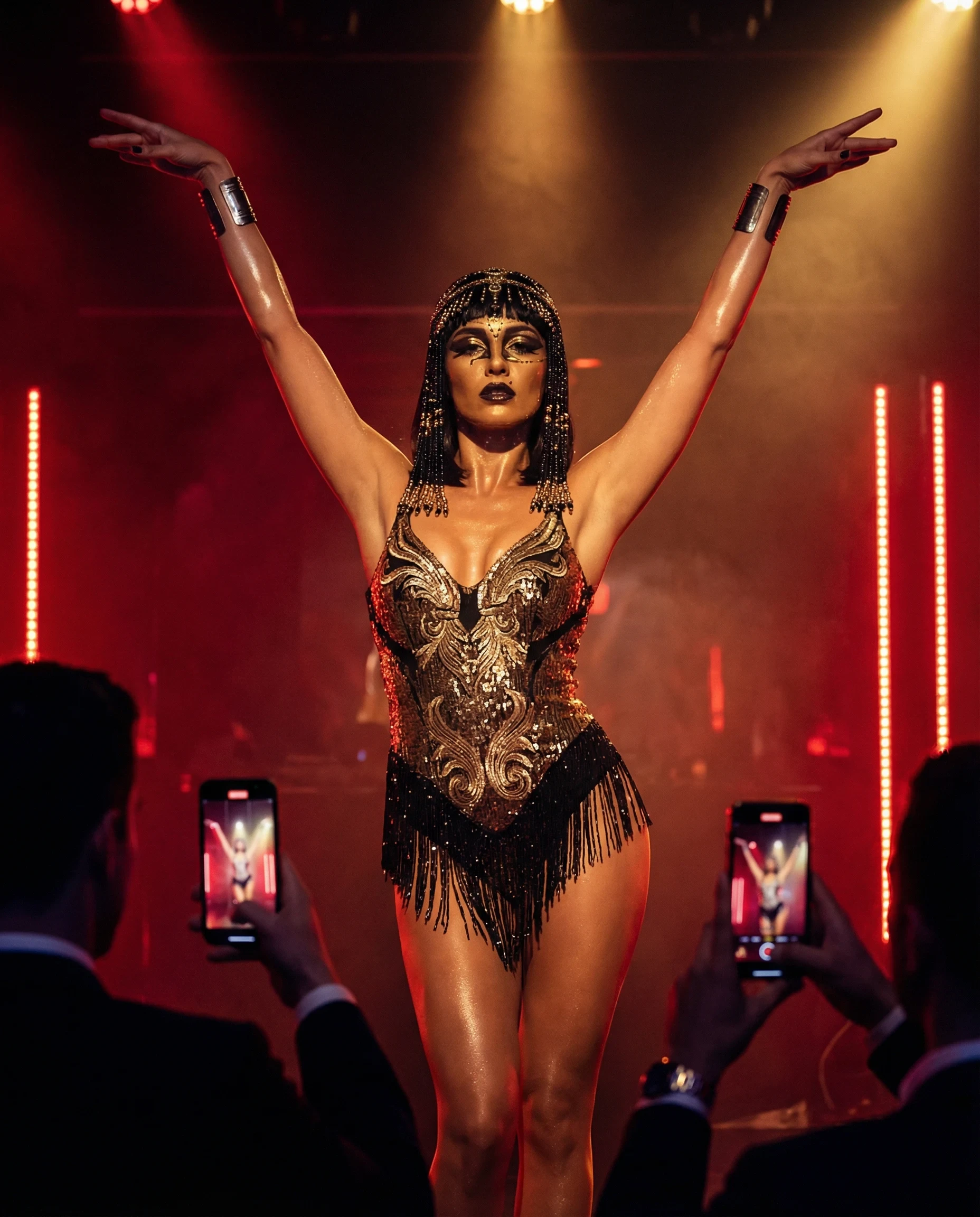
High-end restaurants that become mini clubs at night win for one reason: they control the transition. In Dubai and Ibiza, many of the strongest concepts use a predictable pattern, dinner service peaks early, then a designed “energy lift” begins, leading into a late-night lounge/club mode where DJs take over and tables become social hubs (often around 10–11 PM).
The Core Principle: One Venue, Two Operating Modes
A successful hybrid night runs like a planned scene change: sound + lighting + service pacing shift together (not randomly), because guests react to the combined signal. Audio systems tied to lighting “scenes” are a common best practice for day-to-night transitions.
The ELVN Dinner-to-Club Timeline (Example: 6:00 PM–3:00 AM)
Phase 1: Premium Dining (6:00–9:00 PM)
Goal: Protect luxury dining credibility.
Operations focus:
Host + reservations prioritize seating flow and pacing (avoid early bottlenecks).
Music is conversational (lower SPL), warm ambience.
Lighting is brighter/warmer “dining clarity,” not nightlife drama.
No visible “club behavior” yet (no bottle parades, no performer rush).
Manager cue: “Dining is the product.” If this phase feels like a pre-party, you lose high-end diners.
Phase 2: Subtle Energy Lift (9:00–10:30 PM)
Goal: Increase anticipation without breaking the dining mood.
Operations focus:
Menu strategy: push desserts + digestifs + premium cocktails.
Begin micro-entertainment (light percussion moments, subtle performer appearances near bar).
Start the first BPM increase (still refined).
Lighting moves into a softer, more cinematic tone (don’t blackout the room yet).
This is where many venues win or fail: the lift must feel intentional, not like the restaurant “got loud.”
Phase 3: Service Reset + Space Reconfiguration (10:30–11:15 PM)
Goal: Transition the room without chaos.
Operations focus:
Kitchen close timing: communicate last-call for mains clearly to staff (not guests).
Start clearing specific zones for movement (center lanes, bar-front, DJ sightline).
Increase security presence subtly (door + roaming), prepare ID checks if needed.
Switch to “night mode” lighting scenes + audio profile.
Many venues schedule DJs to start as dinner winds down (around 10 PM) to make the transition seamless rather than abrupt.
Manager cue: This is a handover window. FOH captain + nightlife floor manager must run it together.
Phase 4: Transformation Moment (11:15 PM–12:00 AM)
Goal: Make the shift unmistakable — and exciting.
Operations focus:
DJ becomes a visible focal point (not background).
Tables shift from “dining posture” to “social posture” (standing, sharing, movement).
Introduce a signature ritual: bottle presentation, performer-led moment, or “first drop.”
Lighting goes lower with sharper contrast (but keep premium visibility for staff safety/service).
In Ibiza, this concept is explicit: tables are cleared and the venue transforms into club mode after dinner.
Phase 5: Mini Club Prime (12:00–2:00 AM)
Goal: Maximize revenue + retention.
Operations focus:
Table economics: convert top tables into minimum spend / bottle service logic.
Maintain a predictable “peak cycle” every 30–45 minutes (music + lighting + activation).
Bar team shifts to speed + premium upsell (champagne, signature serves).
Security increases at choke points (restrooms, exits, VIP lanes) to protect guest flow.
Dubai venues often run late-night lounge segments with DJs into the early hours (e.g., 11 PM–3 AM windows are common).
Phase 6: Controlled Landing (2:00–3:00 AM)
Goal: End strong, avoid messy exits.
Operations focus:
Reduce intensity gradually (avoid the “lights-on shock”).
Soft last-call system: bar close sequence + exit flow planning.
Staff shift reset + checkout controls (min spend reconciliation, disputes prevention).
Capture content: aftermovie clips, “finale” moment, branded photo positions.
The Non-Negotiables (What Actually Makes It Work)
1) A Scene-Based System (Not Manual Guessing)
Pre-program sound + lighting “scenes” so the room changes as one unit. This is a known best practice for day-to-night conversions.
2) A Clear Manager Handover
You need two modes of leadership:
Dining Captain (service pacing, guest experience)
Nightlife Floor Lead (energy, security, bar speed, VIP flow)
3) The Transition Must Be Designed for Guests
Guests should feel:
“Wow, this place is evolving,” not “They’re turning the restaurant into a club.”
A Simple Template You Can Reuse (Plug-and-Play)
T-90 min: announce internal “transition countdown” (staff only)
T-60 min: begin BPM + lighting lift
T-45 min: start zone clearing + bar activation plan
T-30 min: DJ visibility increases, security repositions
T-15 min: transformation ritual ready (first peak moment)
T-0: official club-mode start (content capture + signature moment)